
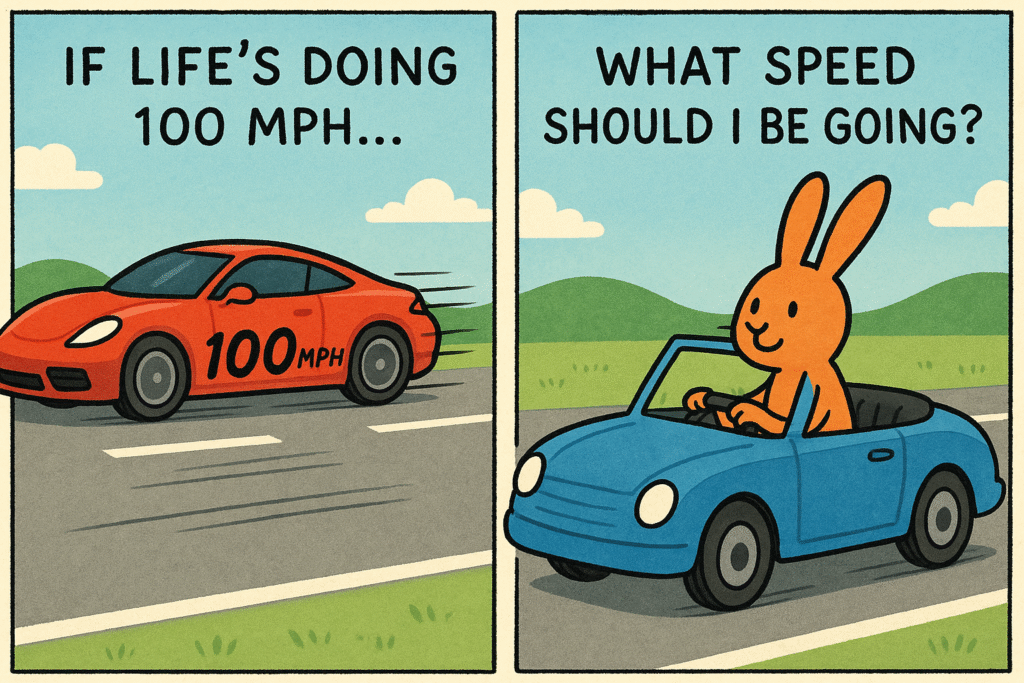
If Life Is Racing at 100mph… Do You Really Need to Speed Up?
The Fast Lane Feeling
Ever feel like life’s in the fast lane doing 100mph, flashing its lights for you to move over, and you’re just there in the middle lane wondering if you left the iron on?
Here’s my take:
If life is bombing along at 100mph, the answer is not to floor it to 120mph and hope for the best. That’s how you end up emotionally in a hedge.
It’s less about speed, more about direction and sanity.
- Some people are doing 150mph… in perfect circles.
- Others are crawling at 30mph… but at least their sat nav knows where they’re going.
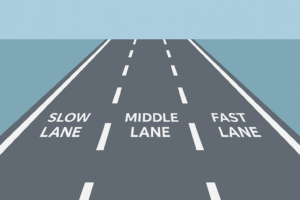
The real win?
Going at a speed where you can still see the road, enjoy the view, and not melt the engine.
That’s the “speed issue” I’m peeking at through the Editor’s Lens this time:
Not how fast we can go, but how wisely we choose our lane, our direction, and when to ease off the accelerator.
The Myth of “Keeping Up”
We live in a world that quietly whispers:
“Everyone else is moving fast. Keep up or get left behind.”
But “everyone else” is a funny idea, isn’t it?
You don’t see:
- Their crashes.
- Their breakdowns.
- Their nights staring at the ceiling wondering what on earth they’re doing.
You just see the highlight laps.
So we push harder, cram more in, check our phones more often, say yes more than is healthy… and then wonder why we feel fried.
Here’s the thing:
Your life is not a race against “everyone”. It’s a journey with yourself.
If you’re always trying to match some invisible 100mph, you can’t hear your own engine. You can’t tell what you actually need.
Speed vs Direction: Who Are You Trying to Overtake?
Let’s play with this for a second.
- You can be very fast and still be totally lost.
- You can be steady and slow and actually arrive where you meant to go.
Imagine two drivers:
Driver A:
110mph, music blasting, looks impressive.
Misses three exits. Ends up nowhere near where they wanted to be.
Driver B:
60mph, no drama.
Knows the route. Arrives with time to spare… and maybe a snack.
To move from being a distracted Driver A to a composed Driver B, you need a roadmap for your days. My How To Win The Time Management War playbook gives you the structure to arrive exactly where you want to be, without the drama.
Which one is “ahead”?
We don’t ask that enough. We just assume “faster = better.”
But in real life:
- Faster isn’t always better.
- Busier isn’t always more meaningful.
- Being “ahead” doesn’t mean you’re happier.
Sometimes getting ahead simply means:
- You’re honest about what matters to you.
- You’re moving in that direction more often than not.
- You’re not destroying yourself in the process.
Your Inner Gearbox: You’re Not Meant to Live in 5th Gear
Think of your life like a car with gears.
You’re not meant to live in 5th gear all the time.
Life has seasons, and you have gears for a reason.
1st & 2nd Gear: Starting, Learning, Catching Your Breath
This is when you:
- Try something new.
- Learn a skill.
- Recover after a busy period.
- Gently roll forward again after a stop.
It might not look fast from the outside, but it’s important. This is where foundations get built.
3rd & 4th Gear: Steady Progress, Turning Up Consistently
This is your cruise speed.
- You’re not sprinting.
- You’re not collapsed on the sofa in defeat.
- You’re showing up, bit by bit, day by day.
Most real growth lives here. Not in the all-or-nothing extremes, but in this middle space where you do the work, rest, adjust, and keep going.
5th Gear: Short Bursts That Actually Matter
5th gear is for:
- A push to finish something important.
- A season where you choose to go all in (not live there forever).
- Moments that need a bit of extra courage and intensity.
But here’s the key:
5th gear should be intentional, not automatic.
It’s for chosen sprints, not your default setting.
If you’re constantly in 5th gear because your ego is shouting, “Do more!”, you’ll pay for it later.
Don’t Forget the Pit Stops
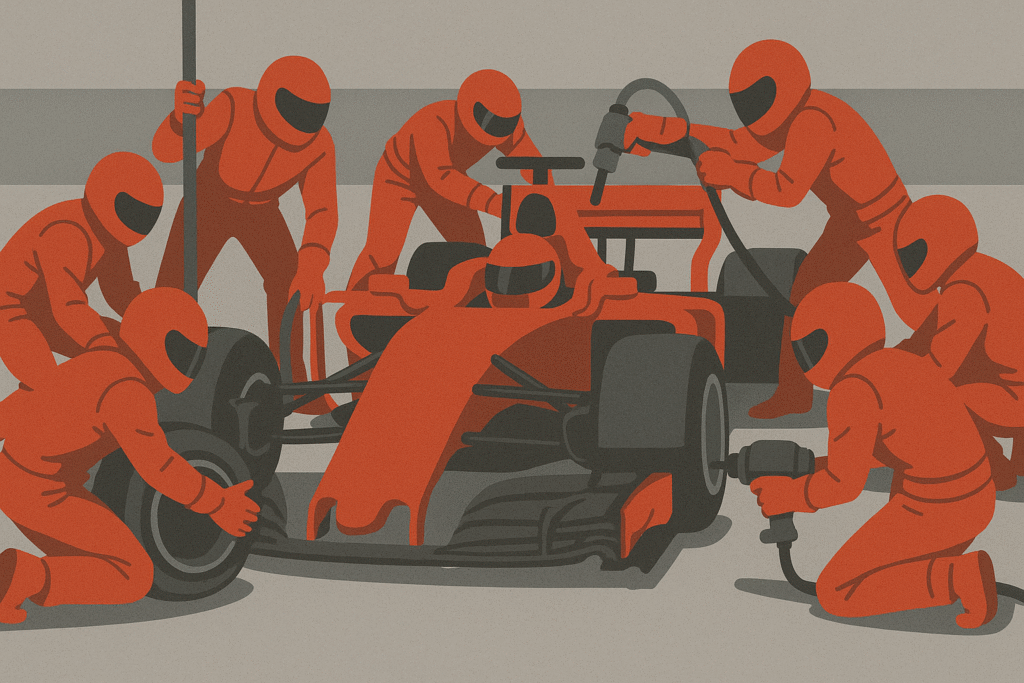
Even Formula 1 cars pull over on purpose.
Not because they’re weak.
Because they’re serious about finishing the race.
- Tyres changed.
- Fuel topped up.
- Quick checks done.
- Back out again.
Rest isn’t the reward at the end of the journey.
Rest is how you make it through the journey.
For humans, pit stops look like:
- Sleep that’s actually sleep, not doom-scrolling.
- A walk without your phone.
- Time with someone who makes you laugh.
- Doing something completely unproductive and enjoying it.
That’s not laziness. That’s maintenance.
A Simple “Speed Check” for Your Life
Let’s do a quick, honest check-in. No judgment. Just noticing.
Signs You’re Red-Lining at 100+mph
- You wake up tired and go to bed wired.
- Your to-do list feels like a guilt museum.
- You feel twitchy if you’re not “doing something productive.”
- Small problems feel huge because you’re already at capacity.
Signs You’re Idling in Neutral
- You talk a lot about what you’re “going to do one day.”
- You keep researching, planning, thinking… and not starting.
- You feel stuck, but also weirdly busy with nothing that truly matters.
Signs You’re Cruising at a Healthy Speed
- You’re not doing everything, but you’re doing what matters most.
- You have pockets of rest that actually restore you.
- You’re making slow-but-steady progress in one or two key areas.
- You can imagine doing this pace for a while without breaking.
Where do you recognise yourself?
You don’t have to fix it today. Just notice it. Awareness is the first exit off the “exhausted and confused” motorway.
A 7-Day “Speed Reset” Experiment
Let’s make this practical. Here’s a gentle experiment you can run over the next week.
-
Choose One Thing to Ease Off
Ask yourself:
“What’s draining me that I can turn down just a little?”
Examples:
- Saying yes to every request at work.
- Checking your phone every ten minutes.
- Working late every night “just to catch up.”
You don’t have to slam the brakes. Just ease off slightly.
-
Choose One Thing to Gently Accelerate
Now ask:
“What’s one small action I’ve been avoiding that would actually move me forward?”
Examples:
- Sending that email you’ve been putting off.
- Going for a 10–15 minute walk each day.
- Writing for 10 minutes instead of waiting for the “perfect mood.”
Give that one thing a little more attention this week. Not everything. Just one thing.
Ready to take control of your week instead of just reacting to it? Download the HTWTTMW playbook—it’s designed specifically to help you focus on “the one thing” and build a week that feels intentional rather than chaotic.
-
Define Your “Cruise Speed” for This Week Only
Don’t plan your whole life. Just this week.
Ask:
“If life is doing 100mph, what speed feels sustainable for me right now?”
It could mean:
- One focused work block a day where you’re really present.
- One non-negotiable rest habit (walk, stretch, book, bath).
- One boundary you protect (no emails after a certain time, for example).
The point is not perfection. The point is less chaos, more intention.
A Few Journal Prompts for the Road
If you like to journal, or even just scribble thoughts on a notepad, here are some prompts to explore:
- Where in my life do I feel like I’m driving too fast for the conditions?
- Where am I effectively in neutral, avoiding something I know matters?
- What would “cruise control” look like for me over the next 30 days?
- If I slowed down by 10%, what might actually improve rather than fall apart?
- If I had to pick one lane to focus on right now (health, work, relationships, a project), which would it be?
You don’t need perfect answers. You just need honest ones.
So… What Speed Should You Be Going?
Maybe this:
Fast enough to feel alive.
Slow enough to stay in control.
Always pointed in a direction that’s actually yours.
You’re not a failure if you’re not matching the speed of the noisiest people.
You don’t have to overtake everyone.
You just have to stop abandoning yourself.
That’s the real “speed issue” I’m exploring this month through The Editor’s Lens.
Not how fast we can go,
but how wisely we choose our lane, our direction,
and when to ease off the accelerator.
So, let me ask you the question that started all of this:
If life’s doing 100mph… what speed are you choosing?
If life has you sprinting faster than you’d like, it might be time to recharge.
Start with The Stress-Free Zone for tools that ease tension, quiet the noise, and help you find your calm again.Or, if you’re craving a deeper mental reset, explore our Books & Journals section — curated reads designed to guide you back to clarity.
Posts may contain affiliate links. If you click on an affiliate link and make a purchase, we may earn a small commission at no additional cost to you. Learn more on our Affiliate Disclosure page.